
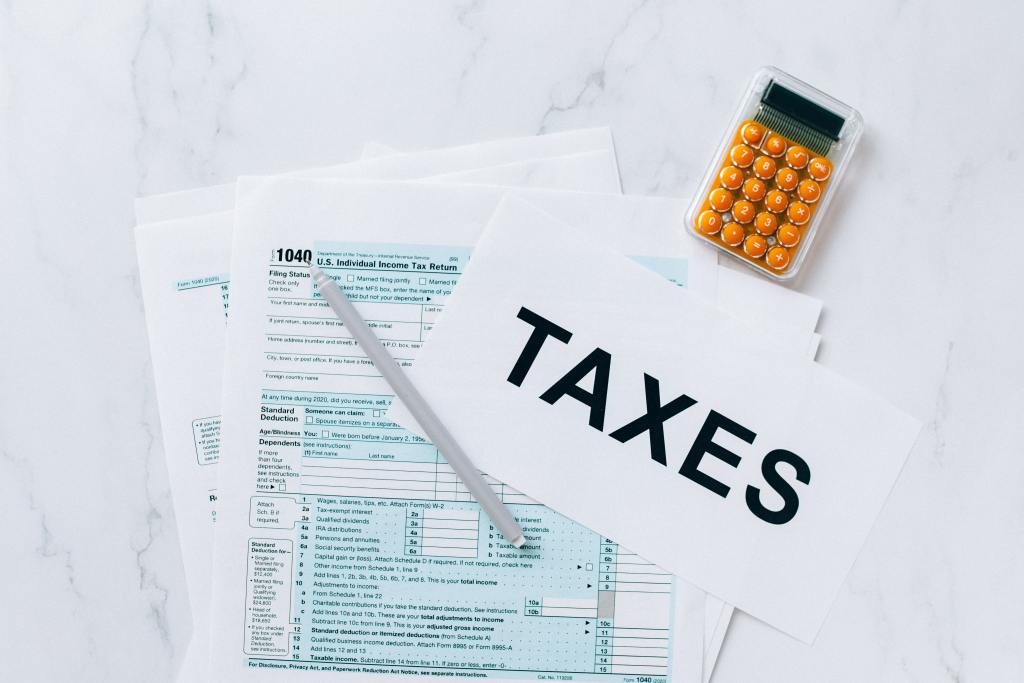
In Toronto, running a short-term rental in 2026 means answering to three levels of government at once. The city controls who can host and for how many nights. The province takes its sales tax on every stay. And since 2024, the federal government can deny your tax deductions entirely if your rental wasn’t compliant with local rules. Miss any one layer and the penalties stack fast — fines up to $100,000 from the city, plus a bigger tax bill from Ottawa.
This guide walks through the legal and tax considerations that actually apply to Toronto hosts right now: registration, night caps, the accommodation tax, HST, income tax, insurance, and condo rules — with the 2026 figures, not the 2023 ones.
TL;DR — the 2026 checklist
- A Toronto short-term rental is any stay under 28 consecutive nights — and only your principal residence qualifies (Chapter 547).
- Registration costs $390 a year (2026), non-refundable; your registration number must appear on every listing, and platforms verify it before bookings go through.
- Entire-unit hosts are capped at 180 nights per calendar year; renting rooms (up to 3 bedrooms, while you stay home) has no night cap.
- Collect 6% Municipal Accommodation Tax (since August 1, 2026) plus 13% HST on the MAT-inclusive subtotal — just under 20% combined.
- Cross $30,000 in taxable sales over four consecutive quarters and GST/HST registration becomes mandatory.
- Since 2024, federal law (ITA s. 67.7) denies your expense deductions for the days your rental was non-compliant — with no time limit on CRA reassessment.
- Your condo board can ban short-term rentals even if the city approves you — the city licence is not an override.
- Fines run $1,000 to $100,000 per offence, plus up to $10,000 per day the violation continues.
Table of contents
- TL;DR — the 2026 checklist
- What counts as a short-term rental in Toronto
- Registration: Chapter 547 and the $390 annual fee
- The 180-night cap on entire-unit rentals
- Municipal Accommodation Tax and HST: what to collect
- GST/HST registration and the $30,000 threshold
- Income tax: reporting income and the s. 67.7 deduction denial
- Insurance and safety requirements
- Condo boards: the second gate most hosts forget
- Penalties for non-compliance
- Staying compliant: your 2026 checklist
- FAQs
What counts as a short-term rental in Toronto
Toronto defines a short-term rental as renting all or part of a dwelling unit for fewer than 28 consecutive nights in exchange for payment. Rent by the night or the week and the city’s short-term rental bylaw (Municipal Code Chapter 547) applies to you. Stays of 28 nights or more fall outside the bylaw — many hosts use 28+ night “mid-term” bookings in slower months to stay legal without burning through their annual night cap.
Note that the federal tax definition is different: for income-tax purposes, a “short-term rental” is a residential property rented or offered for rent for less than 90 consecutive days (ITA s. 67.7). The two definitions serve different laws, so track both.
Registration: Chapter 547 and the $390 annual fee
Every Toronto host must register with Municipal Licensing and Standards before listing. For 2026 the fee is $390 per application or renewal, non-refundable, and a registration lasts one year from its approval date. Let it lapse and you must pull every listing until it’s renewed.
Registration comes with three non-negotiables:
- Principal residence only. You get one registration, for the one home you actually live in — the address on your bills, ID, taxes, and insurance. A second property bought purely for nightly rentals cannot be registered, period.
- The number goes everywhere. Your registration number must appear in every listing, ad, invoice, and contract. Notify the city of any change within 6 days.
- Platforms verify. Airbnb and Vrbo must confirm your registration number before advertising your listing, and must remove unregistered listings within 24 hours of a city request. In practice, an unregistered Toronto listing can’t take bookings at all.
See our step-by-step walkthrough: How Long Does It Take to Get an Airbnb License in Toronto?
The 180-night cap on entire-unit rentals
Register as an entire-unit operator and you can rent the whole home for up to 180 nights per calendar year (January to December). The cap counts whether the nights come from entire-unit bookings alone or a mix of entire-unit and partial-unit use in the same year.
Prefer to host while you’re home? Partial-unit registration — renting rooms while you stay in the unit — has no night cap, limited to 3 bedrooms. Hosts who hit the 180-night ceiling often switch to 28+ night mid-term stays for the rest of the year, which sit outside the short-term rental bylaw entirely.
Municipal Accommodation Tax and HST: what to collect
Two taxes stack on every Toronto short-term stay, and the first one just changed:
- Municipal Accommodation Tax (MAT): 6%. The temporary increase to 8.5% (June 1, 2025 – July 31, 2026) has expired; since August 1, 2026 the rate is back to 6% of the room portion of any stay of four hours or more under 28 nights. If your pricing still charges 8.5%, you’re overcharging guests today. Airbnb and Vrbo collect and remit MAT on platform bookings; for direct bookings you collect it yourself and remit quarterly — due within 30 days of quarter end (April 30, July 30, October 30, January 30). You must file the quarterly MAT report even in quarters with no bookings.
- HST: 13% on the MAT-inclusive subtotal. Ontario’s HST applies on top of the room rate after MAT is added — the city’s own worked example puts the combined load at just under 20% on top of your base rate.
Build both taxes into your pricing math: a $200/night base becomes $212 with MAT, then $239.56 after HST. Guests see the total, and underpricing the tax stack comes straight out of your margin.
GST/HST registration and the $30,000 threshold
The 13% HST on stays doesn’t automatically mean you personally register for a GST/HST account. You’re a small supplier — no registration required — until your taxable sales pass $30,000 CAD over four consecutive calendar quarters. Cross that line and you must register with CRA within 30 days. (The threshold counts taxable supplies across all your businesses, not just the rental.)
Below the threshold, Airbnb collects and remits GST/HST on your behalf unless you’ve supplied your own GST/HST registration number — in which case the responsibility shifts to you, so don’t hand over a number until you’re set up to file. One carve-out: stays longer than one month are exempt from GST/HST on the accommodation charge entirely.
Income tax: reporting income and the s. 67.7 deduction denial
All rental income is taxable and must be reported on your return — and platforms now report host earnings to CRA, so undeclared income is easy to spot. When you’re compliant, the usual deductions apply: mortgage interest, insurance, platform service fees, cleaning and maintenance costs, utilities, and property taxes.
The rule that changed everything arrived with Bill C-69 (Royal Assent June 20, 2024), adding section 67.7 to the Income Tax Act, retroactive to expenses incurred after 2023. If your short-term rental is in a municipality that prohibits STRs — or requires registration you didn’t have — your expense deductions are denied for the non-compliant days, pro-rated as: expense × (non-compliant days ÷ days the property was a short-term rental that year). Operate unregistered for 50 days of a 200-day hosting year and a $1,000 expense loses $250 of deduction.
The sharpest edge: under s. 67.7(4) there is no time limit on CRA reassessment tied to these denials. The normal three-year window doesn’t apply — CRA can revisit the return years later, with interest and penalties compounding. Registration lapses aren’t just a city problem anymore; they’re a federal tax problem. Full breakdown: Airbnb Tax Rules for Ontario Condo Owners.
Insurance and safety requirements
Toronto’s licensing office doesn’t mandate insurance as a registration condition, but it recommends confirming short-term rental coverage with your insurer before your first guest — and the recommendation is serious. A standard homeowner or condo policy typically excludes commercial short-term rental activity, which means a guest injury or property damage during a paid stay can leave you personally exposed on a denied claim. Purpose-built STR coverage exists; price it before you list, not after an incident.
On the safety side, you’re responsible for a guest-ready property: working smoke and carbon monoxide detectors, and compliance with building and fire codes. Full detail: Short-Term Rental Insurance in Ontario.
Condo boards: the second gate most hosts forget
City registration does not override your condo corporation’s rules. If your declaration, bylaws, or rules prohibit or restrict short-term rentals, hosting anyway puts you in breach of your condo documents — enforceable through fines, liens, or court action — regardless of your city licence. This is the single most common way Toronto condo hosts get caught: legal with the city, illegal under their own building’s rules.
Read the declaration and bylaws before paying the $390 registration fee, and get any required board consent in writing. Details: Toronto Condo Airbnb Board Rules.
Penalties for non-compliance
Toronto enforces Chapter 547 with escalating consequences:
- Fines of $1,000 to $100,000 per offence on conviction, plus a special fine designed to strip any profit the violation earned.
- Up to $10,000 per day for each day a violation continues.
- Listing removal — platforms must pull unregistered listings within 24 hours of a city request.
- Up to a 12-month ban on re-registration after serious violations.
And the federal layer from s. 67.7 applies on top: denied deductions, back taxes, interest, and penalties — with no reassessment deadline. Compliance is dramatically cheaper than the alternative.
Staying compliant: your 2026 checklist
- Register with MLS ($390/year) and display the number on every listing, ad, and invoice.
- Confirm your condo board allows short-term rentals — in writing — before you list.
- Track entire-unit nights against the 180-night calendar-year cap.
- Collect 6% MAT and 13% HST correctly; file the quarterly MAT report even with zero bookings.
- Watch the $30,000 GST/HST threshold across four quarters; register within 30 days of crossing it.
- Carry short-term rental insurance — don’t rely on a standard homeowner policy.
- Report all rental income; keep registration current so your deductions survive s. 67.7.
New to the process? Start here: What Is a Short-Term Rental? 2026 Toronto Owner’s Guide.
If the paperwork, tax filings, and night-counting sound like a second job, that’s exactly what a manager absorbs. Home Again’s Toronto Airbnb management keeps registrations current, MAT filings on schedule, and pricing inside the 180-night cap — so the legal stack never becomes your problem. Talk to us about your property.
Frequently asked questions
Do I need to register my Airbnb with the City of Toronto?
Yes. Every Toronto host must register with Municipal Licensing and Standards before listing. The 2026 fee is $390 per year, non-refundable, for your principal residence only. Your registration number must appear on every listing, and platforms verify it before bookings can go through.
What is Toronto’s Municipal Accommodation Tax in 2026?
6% of the room portion of stays under 28 nights, effective August 1, 2026. The temporary 8.5% rate (June 2025 – July 2026) has expired. Registered operators remit quarterly — April 30, July 30, October 30, and January 30 — even in quarters with no bookings. Platforms collect it on platform bookings; you collect it yourself on direct bookings.
Can I deduct short-term rental expenses on my Canadian tax return?
Yes — if the rental was compliant. Mortgage interest, insurance, platform fees, cleaning, and maintenance are deductible for compliant periods. But since 2024, ITA s. 67.7 denies deductions for the days your rental didn’t meet local registration or licensing rules, pro-rated by day, with no time limit on CRA reassessment.
Do I need to charge HST on my Toronto Airbnb?
13% HST applies to short-term stays in Ontario, charged on the subtotal that already includes the 6% accommodation tax. You must register for a GST/HST account once your taxable sales exceed $30,000 over four consecutive quarters; below that, Airbnb generally collects and remits HST on your behalf.
Can my condo board stop me from hosting on Airbnb?
Yes. A city registration doesn’t override your condo corporation’s declaration, bylaws, or rules. If your building prohibits short-term rentals, hosting anyway breaches your condo documents regardless of your city licence. Check the bylaws and get board consent in writing before registering.
What happens if I host without registering in Toronto?
You’re committing an offence under Chapter 547: fines of $1,000 to $100,000, up to $10,000 per day the violation continues, listing removal, and up to a 12-month re-registration ban. On top of that, federal tax law denies your expense deductions for the non-compliant period.